Orangeville sits on high ground, and anyone who has driven up from the south in January knows the weather changes on the way. Winter here brings three separate things a house has to deal with: lower temperatures, steady wind, and snow that stays. Each one attacks a home differently, so each needs its own defence.
Attic insulation is the answer to the first. Here is how to handle all three.
The cold
Cold works by simple conduction. The bigger the gap between indoor and outdoor temperature, the faster heat moves through your ceilings, walls and floors. Insulation is what slows it.
Your defence
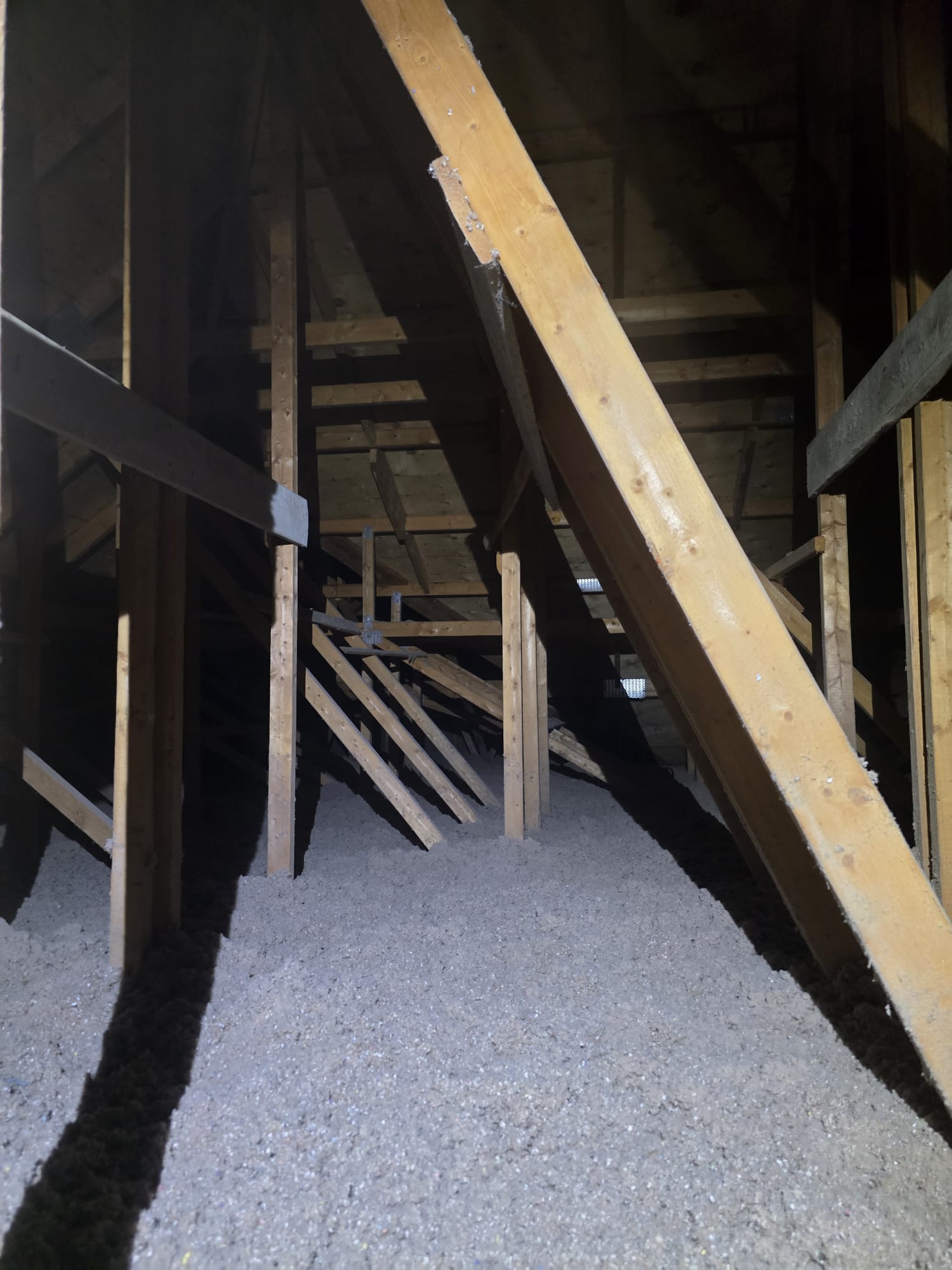
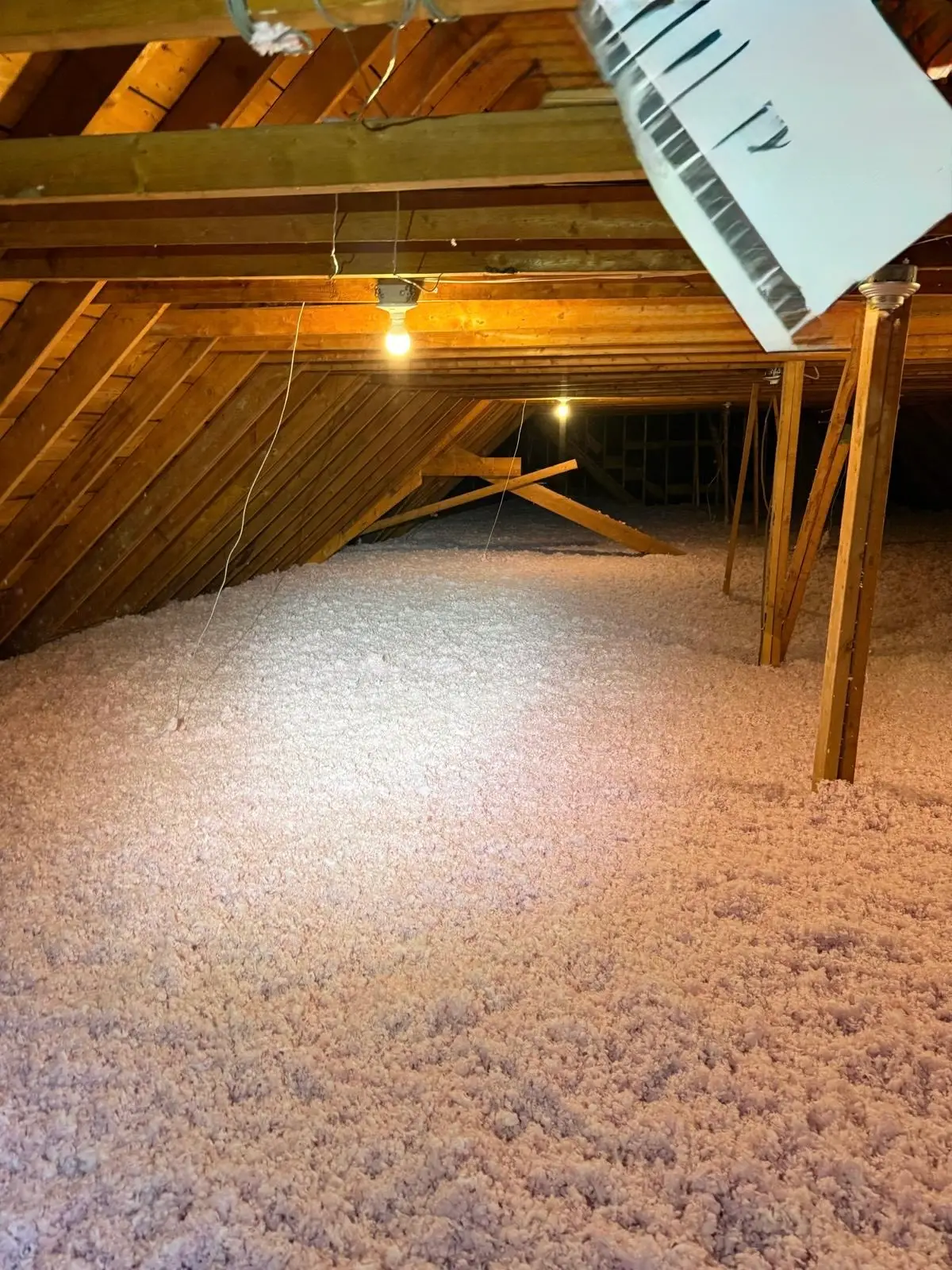
- Attic. Depth is what counts. If the joists are visible, there is not enough. Our attic insulation service in Orangeville tops up with blown-in cellulose or fibreglass. Check yours with how to check your insulation before winter.
- Walls. Natural Resources Canada notes that uninsulated walls can lose more heat than a typical attic. In older homes, drill and fill insulation fills empty cavities.
- Basement. Blanket wrap insulation covers bare foundation walls.
See also Orangeville sits higher and colder than most of the GTA.
The wind
Wind does not go through insulation so much as around it. It pushes cold air in through gaps on one side of the house and pulls warm air out through gaps on the other. A house can be well insulated and still feel drafty.
Your defence
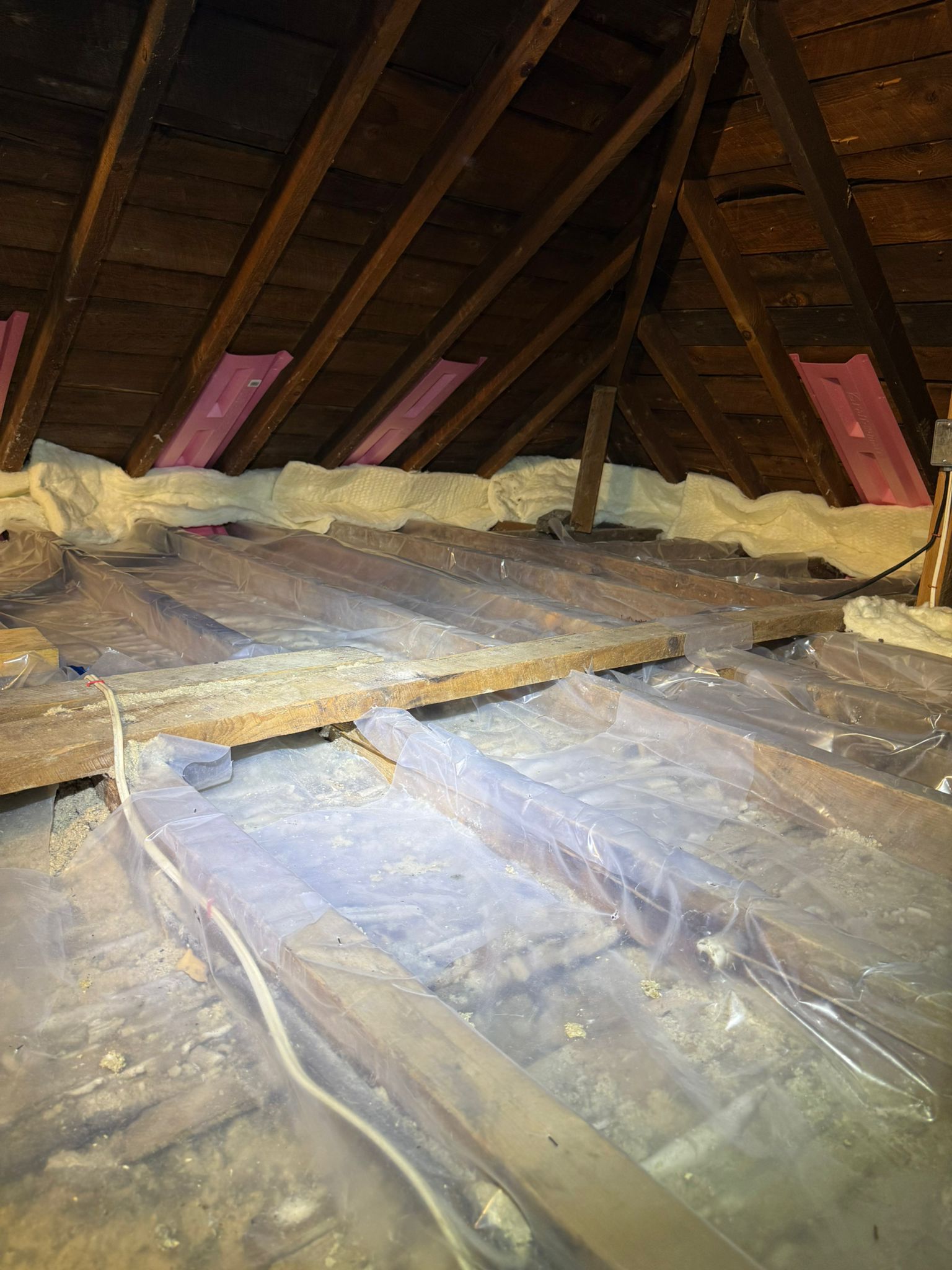
- Air seal the attic floor. Natural Resources Canada’s Roofs and attics guide says leaks around chimneys, vents, plumbing pipes and electrical boxes can account for substantial heat loss.
- Seal the rim joist with spray foam insulation, which insulates and blocks air together.
- Tighten the whole house with AeroBarrier.
- Weatherstrip and caulk doors, windows and the attic hatch. Natural Resources Canada’s materials guide lists the options.
The snow
Snow on the roof is harmless as long as the roof stays cold. When heat leaks into the attic, the snow melts from below, runs to the cold eaves and refreezes as an ice dam. Natural Resources Canada links ice damming to heat escaping at the perimeter of the attic floor.
Your defence
- Insulate fully to the edges of the attic.
- Keep the eaves ventilated with baffles.
- Replace insulation damaged by past leaks. See attic mould and insulation removal in Orangeville and our removal service.
Older homes feel all three
A house built generations ago tends to be thin on insulation, loose on air sealing and vulnerable at the roof edge all at once. We cover this in a cold hill town is hard on an older home and built for the escarpment winter. If your attic has loose grey-brown granules, it may be vermiculite. Leave it undisturbed and have it assessed.
Farms, workshops and outbuildings
A heated shop or barn space loses heat the same three ways, usually faster. See insulating hobby farms, workshops and barn spaces. For a cold room above an attached garage, see garage ceiling insulation.
What you can expect
The U.S. EPA estimates average savings of 15% on heating and cooling costs from air sealing and adding insulation in attics, crawl space floors and basements (ENERGY STAR). It is a modelled U.S. average, so treat it as a rough guide.
Rebates in town and in the county
Rebates are open to more than in-town homes. See rebates for in-town homes and Dufferin farms alike and our energy rebate page, and confirm current terms.
Get ahead of the weather
Contact us for an estimate before the cold, the wind and the snow all arrive together.