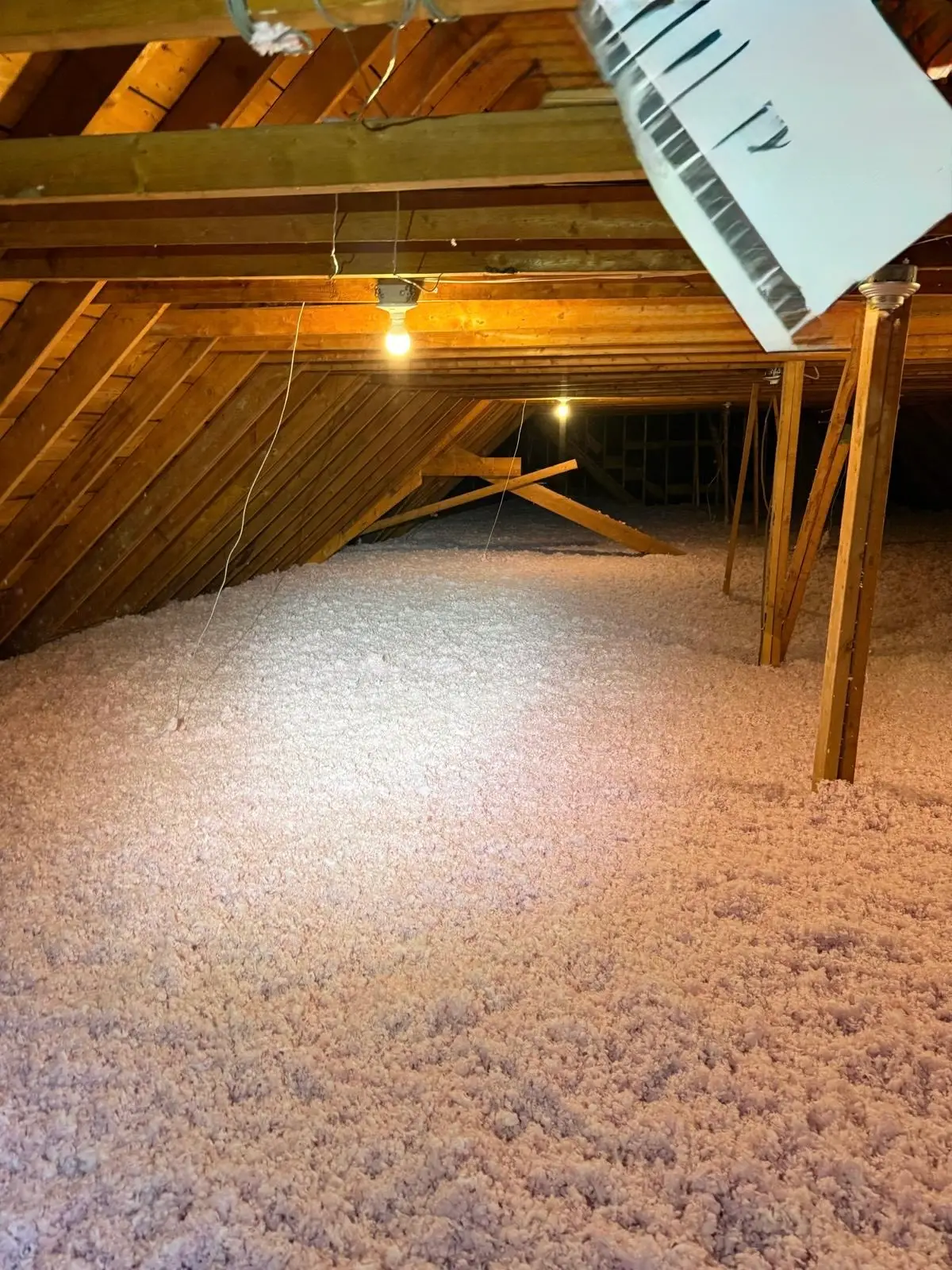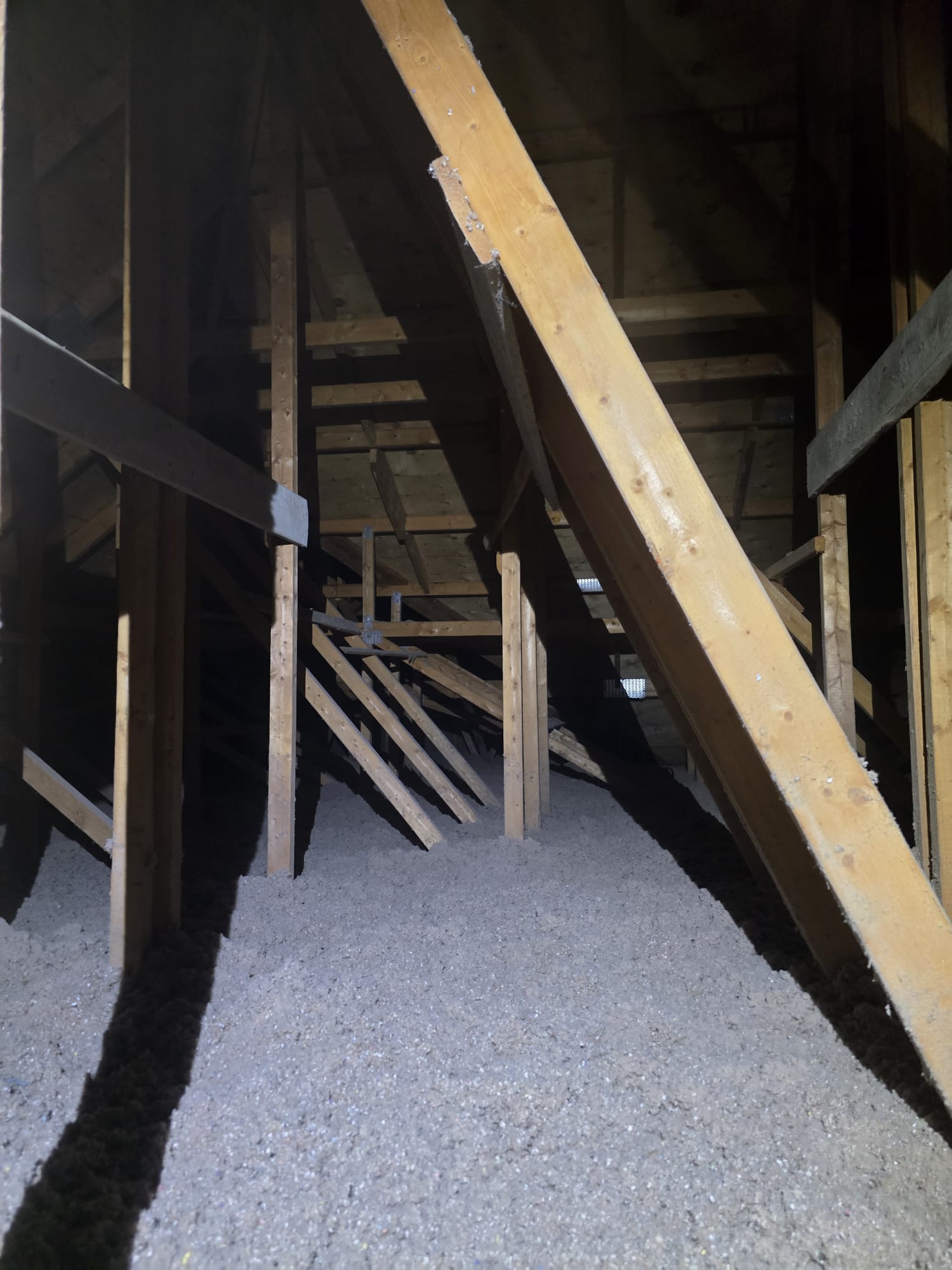

Orangeville sits high. Up on the Headwaters, it gets a genuinely harder winter than the lower GTA — more snow, colder stretches, wind that finds every gap. And a lot of Orangeville’s housing is older: the heart of town is a beautifully preserved Victorian main street, wrapped in decades of established neighbourhoods.
Put those two facts together and you get the reason so many Orangeville homes are cold and expensive to heat: a hard, high-elevation winter punishing an older home that was never insulated for today’s standards. The harsher the winter, the more a thin attic costs you — and up here, the winter is harsh.
Here’s what these homes need.
Why a colder location makes a thin attic worse
It’s not complicated, but it matters: the colder it is outside, the faster heat escapes through an under-insulated attic. The rate of heat loss depends on the temperature difference between your warm rooms and the cold outdoors — so on a −20°C Orangeville night, an inadequate attic bleeds heat far faster than the same attic would on a milder −8°C night closer to the lake.
Over a long, cold, snowy Headwaters winter, that adds up to:
- Higher heating bills than a similar home in a milder spot
- Colder rooms the insulation can’t keep up with
- More ice dams — the snowier the roof and the more heat leaking up, the worse the melt-refreeze cycle at your eaves
So in Orangeville, getting the attic right isn’t a marginal improvement — the cold climate makes it one of the highest-impact things you can do to a home.
Why Orangeville’s older homes have the most to lose
The town’s older and heritage housing — the Victorian core, the established neighbourhoods — is characterful and worth preserving. It’s also, insulation-wise, usually behind:
Built long before modern standards. Older homes were insulated to the norms of their era, far below today’s. Many attics have never been meaningfully upgraded.
Settled over the decades. Whatever’s up there has compressed, so the real depth is less than it was.
Leaky by modern standards. Older construction has gaps the current building code wouldn’t allow — and in a cold, windy town, those gaps cost more than they would in a milder one.
Watch for vermiculite in older attics — loose greyish pebble-like granules that can contain asbestos. Don’t disturb it; have it tested. Attic insulation removal →
The upside: the older and less-touched the home, the bigger the improvement available — and in Orangeville’s climate, the bigger the payback.
Measure what you’ve got — five minutes
Don’t assume from the age of the house. Measure.
- Open the attic hatch, shine a light, step only on joists
- Push a ruler to the drywall at several spots, including near the eaves
- Convert:
| Material | R per inch | 8 in | 12 in | 16 in |
|---|---|---|---|---|
| Blown cellulose | ~3.4 – 3.8 | ~R-28 | ~R-42 | ~R-56 |
| Blown fibreglass | ~2.7 – 3.0 | ~R-22 | ~R-34 | ~R-45 |
| Settled batts | ~2.5 – 3.2 | ~R-22 | — | — |
Target: R-50 minimum (rebate threshold), R-60 as the goal — and in a cold town like Orangeville, R-60 is genuinely worth aiming for. Many older Orangeville attics measure well below R-50.
The three things that matter most in a cold-climate older home
1. Air sealing first — the biggest lever here
In a leaky older home in a windy, cold town, air movement carries away an enormous share of your heat. Sealing the ceiling penetrations — around the chimney, wiring, plumbing stacks, the tops of interior walls, light fixtures, the hatch — is often the single highest-impact step, and it’s done before insulation. Wind-driven air leakage is worse at elevation, which makes this matter more in Orangeville than in a sheltered lower spot.
2. Ventilation and baffles — and ice dams
A long snowy winter plus heat leaking into the attic equals ice dams: ice building at the eaves, icicles, and water backing up under the shingles into your ceilings. The fix is the same building science every time — air seal, insulate to full depth to the eaves, and keep the attic ventilated so the roof deck stays cold and even. Baffles keep the soffit vents clear. Baffle installation →
3. Full depth, all the way to the eaves
The perimeter is shorted most often and sits right over your rooms. In a cold climate, reaching the edges matters even more. R-50 minimum, R-60 target.
The walls, and the room over the garage
Many older Orangeville homes have little or no wall insulation, and in this climate cold walls are a real comfort problem. Where you can’t open the walls, drill and fill insulates them through small holes — worth serious consideration in a cold town. Drill and fill →
And the cold room over the garage — if you have one that’s always freezing, that’s a garage-ceiling job, not an attic one. Its floor sits over an unheated garage. Garage ceiling insulation →
What a proper job looks like
- Assess — measure depth, identify material, check for vermiculite, check ventilation and penetrations
- Test or stop for vermiculite where present
- Remove only if contaminated
- Air seal the ceiling plane — the highest-value step in a cold, leaky older home
- Install baffles, confirm soffit intake
- Insulate and weatherstrip the hatch
- Blow to depth, to the eaves — R-50 minimum, R-60 target
- Mark depths so the result is verifiable
On material: cellulose is denser, reaches the target in less depth, and slows air movement well — a good fit for a leaky older home in a cold climate. Fibreglass is lighter and often a bit cheaper. Both are rebate-eligible. Cellulose → · Fibreglass →
If you’re in a newer Orangeville subdivision or rural Dufferin
Not all of Orangeville is old. The newer subdivisions have the usual production-build shortfalls (settling, missing baffles, bare hatch, unsealed ceiling), and out in rural Dufferin you’ll find farmhouses and country homes — often on propane or oil, which makes insulation pay back even more (more on rural Dufferin and farm buildings in our other Orangeville guides). Whatever the home, the cold climate rewards doing the attic right.
Frequently asked questions
Does Orangeville’s colder weather really make a difference to my attic? Yes — the colder it is outside, the faster an under-insulated attic loses heat. A cold, snowy, windy town punishes a thin attic harder than a milder location would.
Is R-60 overkill? In a cold town like Orangeville, R-60 is genuinely worth aiming for where there’s headroom — it holds heat better through a long, hard winter.
Why do I get ice dams every winter? Heat leaking into the attic melts snow, which refreezes at the cold eaves. The fix is air sealing, full-depth insulation to the eaves, and ventilation — not just more insulation.
What’s vermiculite? Loose greyish granules in some older attics; can contain asbestos. Don’t disturb it — have it tested first.
Do I have to remove old insulation? Only if contaminated or vermiculite. Otherwise new goes over old and R-values add.
Do I have to leave home during the work? No.
Get ahead of the next cold winter — free assessment
In a town that gets a real winter, the attic is the first place to look if your home is cold or costly to heat. A proper assessment measures what you’ve got, checks the ventilation, and tells you exactly what it needs before the cold returns.
Pro Insulation Contracting has insulated Ontario homes for over 10 years and serves Orangeville and Dufferin County. Free on-site assessment, written scope, fixed price before any work starts.
📞 (416) 315-0471 · Book a free attic assessment →